“Art is not an end in itself, but a means of addressing humanity.”
Modest Mussorgsky
As philosopher Richard Wollheim says, art is “one of the most elusive of the traditional problems of human culture.” In its simplest manifestation, art is a form of communication that serves as a vehicle for the expression of emotions and ideas. As ideas and beliefs are culturally specific and constantly changing over time, there really is no generally agreed definition of what constitutes art. That being said, the classical branches of the visual arts are identified as painting, sculpture and architecture. Literature and poetry are considered part of the humanities or as one of the arts, while music, alongside theatre, film and dance belong to the performing arts. In this section you will discover not only specific explorations of individual art forms, but also a more detailed probing of the relationship between the visual arts and music, including painting and music, sculpture and music and architecture and music. Originally, poetry and music were treated as a unity, but gradually they have become more independent. Nevertheless, the two art forms have never forgotten their shared genetic makeup, and been intertwined for millennia. Art and music have engaged in a dynamic relationship that reveals a diverse range of human activity intended to be appreciated for their beauty.
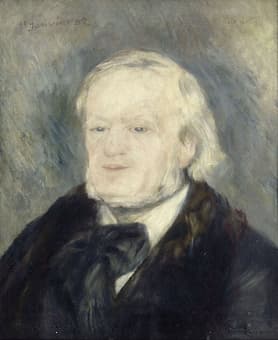
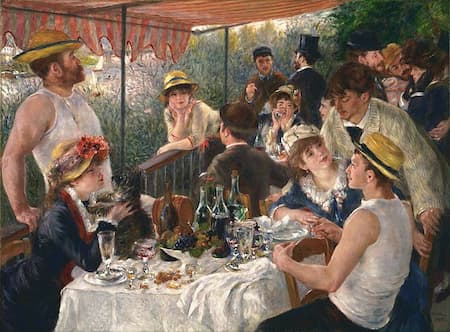
Pierre August Renoir (1841-1919), who loved music, was a great admirer of Richard Wagner (1813-1883). As one of the first Wagnerites in France, Renoir jumped at the opportunity to meet his hero when he was in Italy in 1882. Two
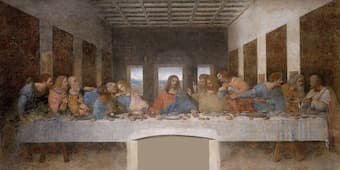
On 15 April 1452, a small village near the town of Vinci in Tuscany saw the birth of Leonardo da Vinci, one of the most diversely talented individuals to ever have lived. Scholars have rightly suggested that “the scope and
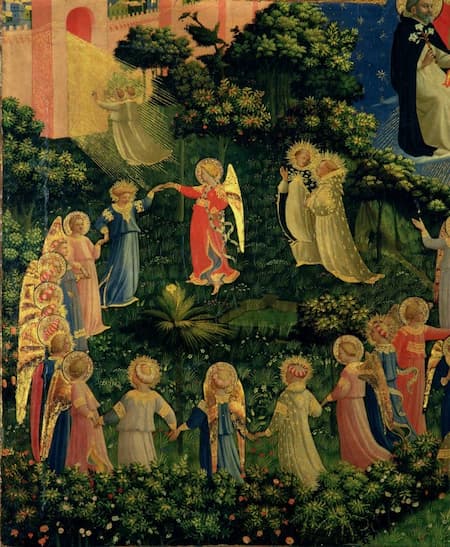
Zdeněk Fibich: Studies of Painters (Malířské studie) In this 1899 work, Czech composer Zdeněk Fibich (1850-1900) chose works by 5 different painters from the 15th to the 18th centuries to illustrate in his Studies of Painters, Op. 56 (Malířské studie).
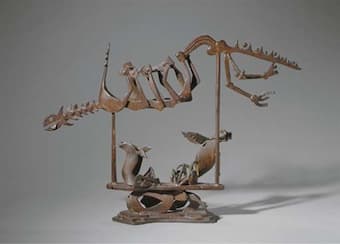
Most composers who look to art for inspiration look to paintings. A few, however, look to sculpture and one composer who look at four very different artists for a similar theme was Virko Baley (b. 1938). This Ukrainian-American composer began
Pierre-August Renoir (1841-1919) led the Impressionist style but also was a singer, a student of Charles Gounod. Family circumstances, however, led him away from Gounod’s church choir and into a porcelain factory apprenticeship at age 13. Mechanization of his work
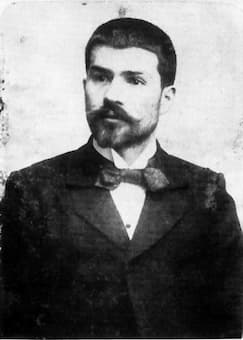
“Work like a slave; command like a king; create like a god” The majority of photographs taken of French-Romanian sculptor Constantin Brâncuși (1876-1957) show a kind of Grizzly Adams, a man with unkempt hair, long beard, a deeply lined face
American sculptor Alexander Calder (1898-1976) was known not only for his distinctive mobiles but also his ‘stabiles,’ non-moving sculptures. One of his best-known ‘stabiles’ is Cirque Calder (Calder’s Circus), a collection of over 70 miniature figures and animals with over
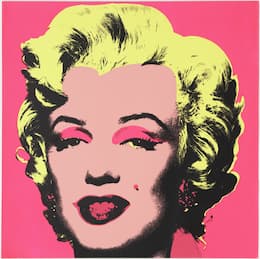
Born Andrew Warhola on 6 August 1928 in Pittsburgh, Andy Warhol (1928-1987) was a leading figure in the visual art movement known as pop art. This exciting artistic movement challenged the traditions of fine art by including imagery from popular